TENSORWAVE  •  CONTENT SYSTEM PROOF OF WORK

I MADE THE
FIRST 10 MINUTES.

THE EPISODE IS THE ARTIFACT.
THE SYSTEM BEHIND IT IS THE PITCH.

Instead of telling you how I would approach TensorWave’s content, I built something. I researched and produced an original episode, then used the same work to demonstrate how an AI-native content system can move from research to long-form storytelling, written content, video, short-form, social, and executive communication.

PLAY THE EPISODE ▶ SEE HOW I BUILT IT ↓

RESEARCH. NARRATIVE. PRODUCTION. SYSTEMS.

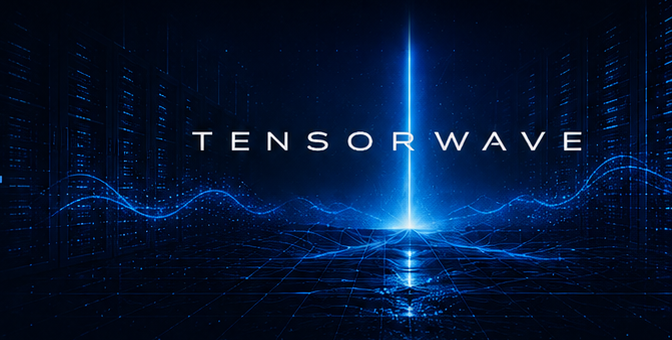
TensorWave: a luminous blue beam rising from a wireframe data-center landscape

SELF-INITIATED CAMPAIGN, CREATED FOR THIS OPPORTUNITY

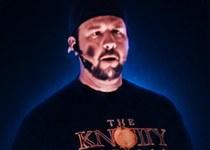
Bronson Zolik narrating the episode, lit in blue

EPISODE 01

The Bottleneck Moved

Beyond the GPU: Why AI Infrastructure Is Becoming the Product

The AI race spent years obsessing over one constraint: the chip. Then the chips started arriving. The problem didn’t disappear. It moved. This episode follows that bottleneck from silicon into power, cooling, software, operations, and the systems that turn hardware into usable AI capacity.

00:00
-00:00

~10 MIN • ORIGINAL RESEARCH • WRITTEN & NARRATED BY BRONSON ZOLIK

ORIGINAL AUDIO • PRODUCED BY BRONSON ZOLIK

One story.
An entire content system.

A strong technical story should not end when the episode publishes. The research can become long-form audio, video, written analysis, short clips, executive commentary, social content, and the starting point for the next story. The goal is not to automate creativity. The goal is to build a system that gives a strong creative team more leverage.

RESEARCH / CASE FILE
PODCAST VIDEO BLOG / ARTICLE SHORT CLIPS SOCIAL EXEC TALKING POINTS

↻ NEXT STORY

THE SYSTEM BEHIND THE STORY

The podcast workflow is one branch.

The same researched Case File feeds multiple editorial formats. When the chosen output is audio, it flows down the production chain below.

RESEARCH CASE FILE
→ BLOG POST → TECHNICAL ARTICLE → SOCIAL / EXECUTIVE CONTENT → PODCAST SCREENPLAY
THE AUDIO BRANCH pdcst FINAL EPISODE rcrdme / SubForge VIDEO / CLIPS / CAPTIONS + PRIVATE GPU SYNTHETIC STUDIO
when the format calls for visual production
1 PRIVATE

ScriptForge

Research first. Format second.

ScriptForge builds a sourced Case File before it writes. That evidence layer can then become a podcast screenplay, human-toned blog post, technical article, social content, executive talking points, or another editorial format.

RESEARCH → CASE FILE → MANY OUTPUTS

2 PRIVATE

pdcst

When the output is audio, the script becomes a production.

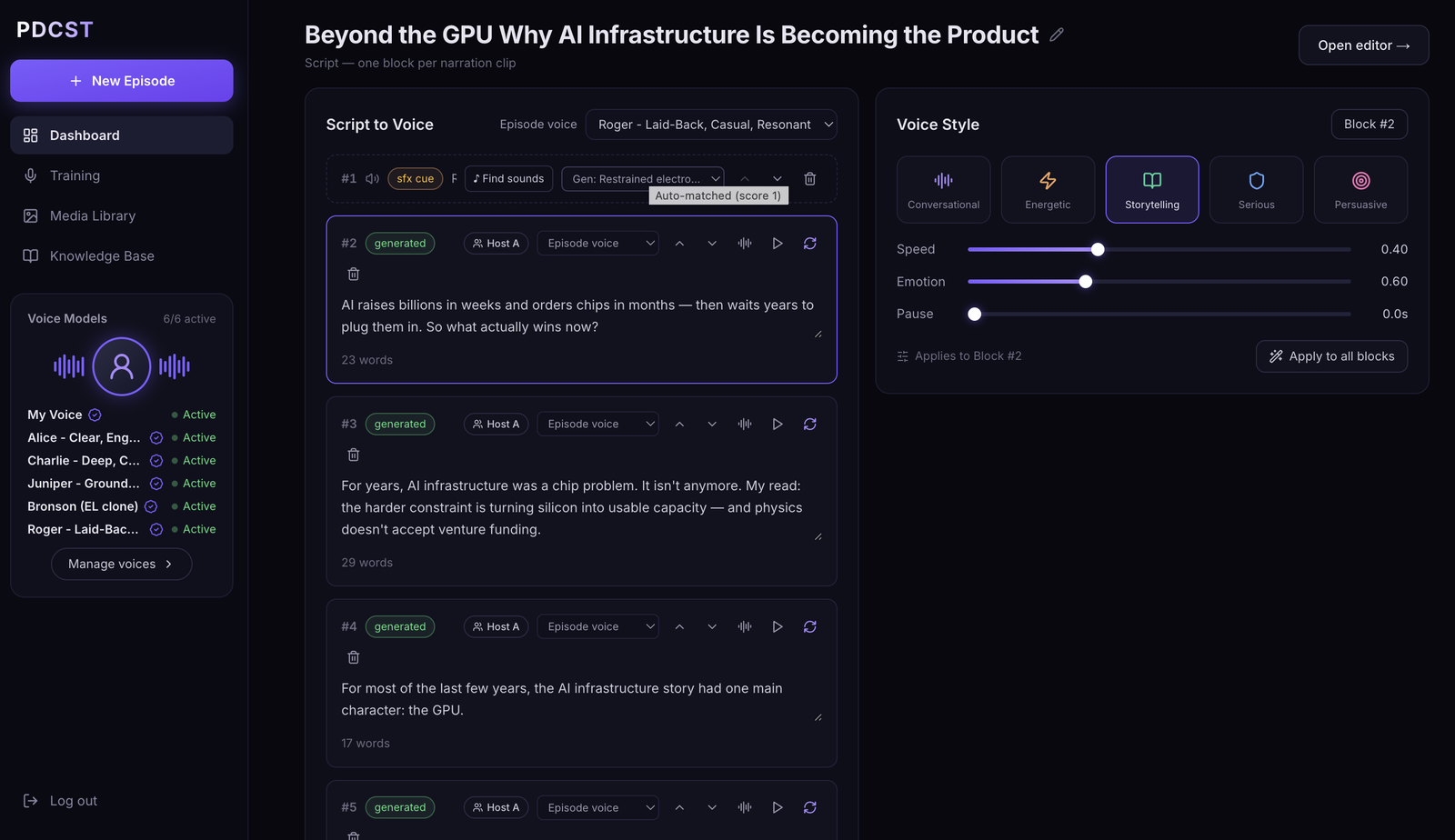
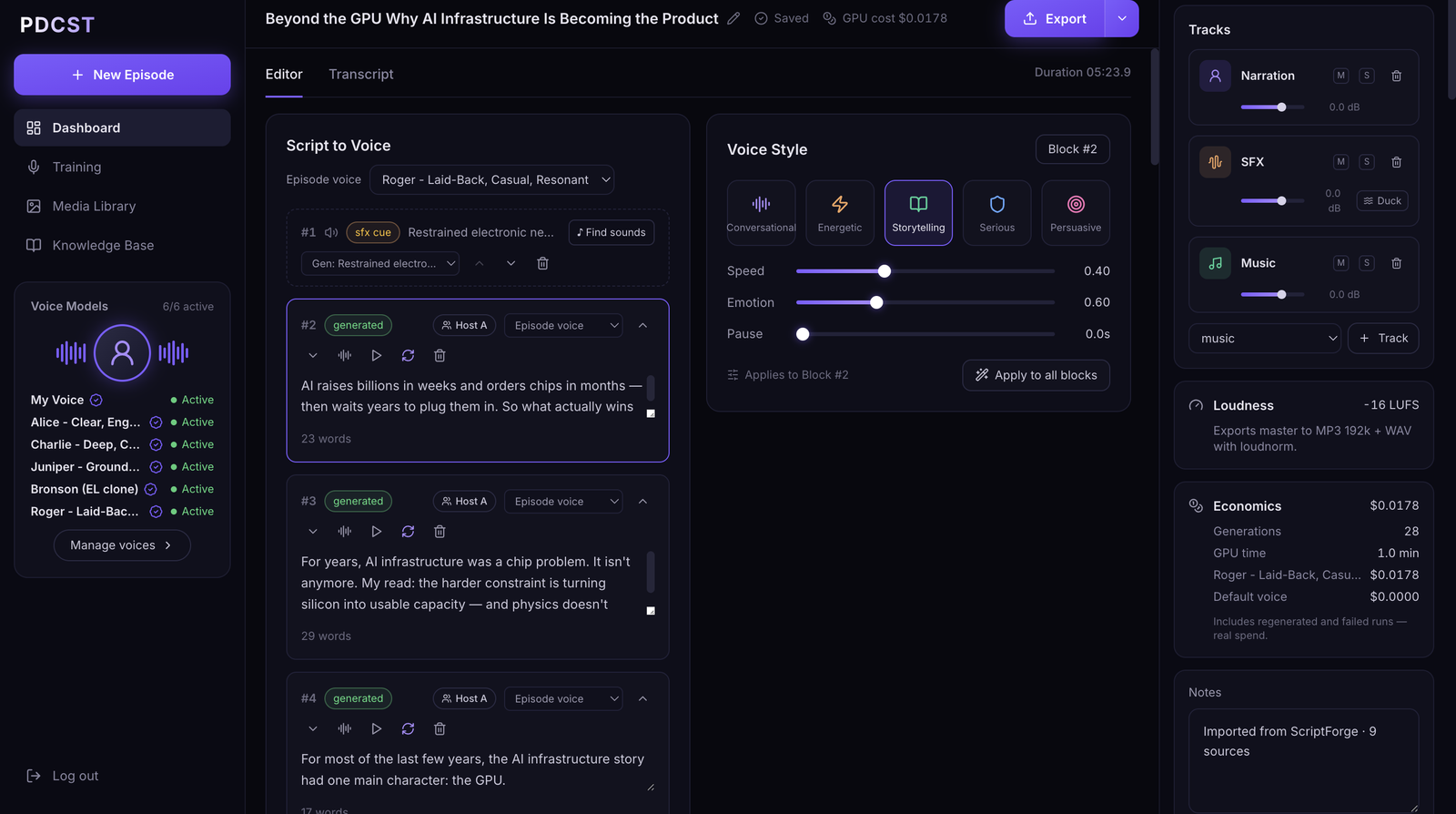
ScriptForge hands a structured screenplay into pdcst. pdcst turns the screenplay into a production environment with recording, timeline cues, sound design, and finishing.

SCREENPLAY → CUES → TIMELINE → RECORD

3 PUBLIC TOOLS

rcrdme / SubForge

Long-form becomes distributable media.

Recording, video finishing, captions, subtitles, short-form clips, and derivative media move through the broader creator stack.

RECORD → EDIT → CAPTION → REPURPOSE

4 PRIVATE • SELF-ONLY

Private GPU Synthetic Studio

Scale the format when it makes sense.

A private GPU-backed synthetic-media environment built around my own likeness for rapid visual content production. It is intentionally self-only and is not offered as a public deepfake service.

PRIVATE • GPU-BACKED • SELF-ONLY
EDITORIAL ARCHITECTURE

One research layer.
Many outputs.

Good research is expensive. Do not throw it away after one format. ScriptForge creates a common evidence layer that can support multiple pieces of content while keeping the editorial foundation consistent.

PODCAST BLOG POST TECHNICAL ARTICLE LINKEDIN
CASE FILE THE COMMON EVIDENCE LAYER
X / SOCIAL EXECUTIVE TALKING POINTS VIDEO SCRIPT SHORT-FORM CONTENT

THE REAL PITCH

Build the engine,
not just the episode.

A strong technical story should not disappear after one publish. The research should feed the episode. The episode should feed video. The strongest ideas should become written content, short-form, social, executive commentary, and the starting point for the next story. The value compounds when the workflow compounds. I am interested in building that system.

1

RESEARCH ONCE

Build the evidence layer.

2

CREATE THE FLAGSHIP

Podcast, interview, video, or technical story.

3

MULTIPLY THE ASSET

Blog, clips, social, executive content, technical excerpts.

4

FEED THE NEXT STORY

Research and audience response become inputs for the next cycle.

BEFORE THE SYSTEMS

I built creator tools
after I became a creator.

The production stack didn’t come from theory. Before building ScriptForge, pdcst, rcrdme, or SubForge, I was already creating commercial content end to end.

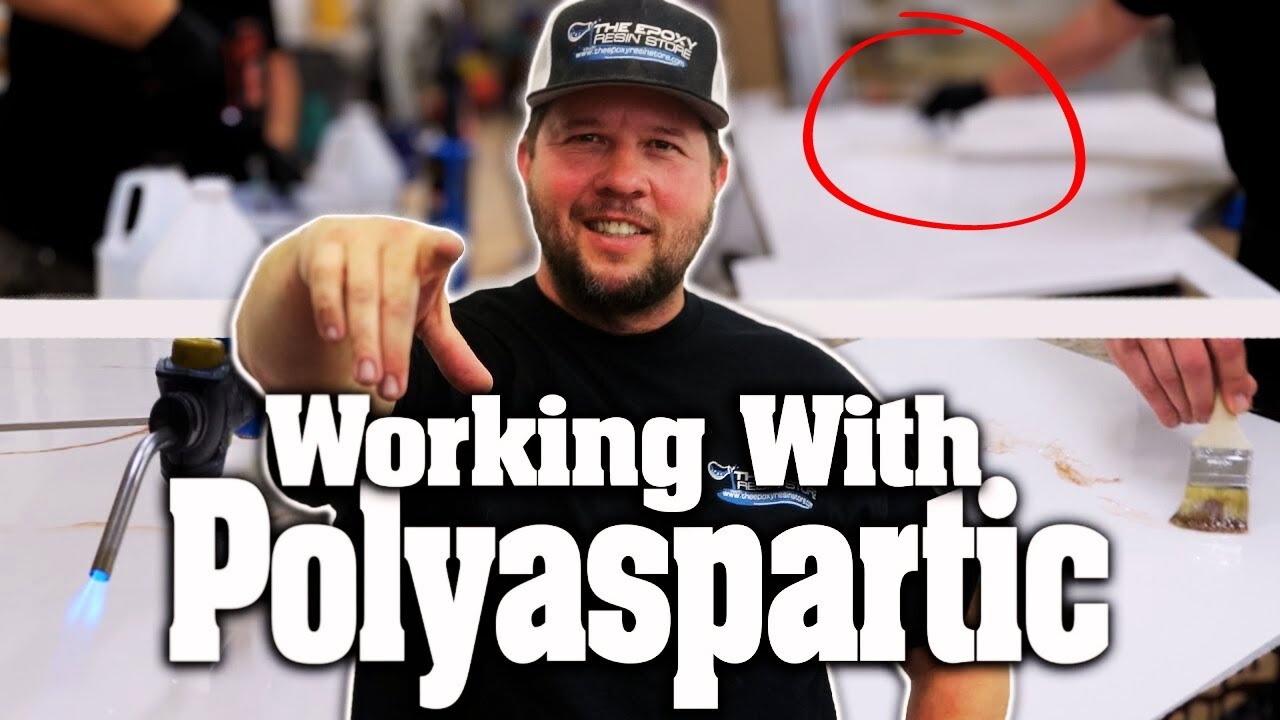
For The Epoxy Resin Store, I originated YouTube concepts from a blank page and carried them through production, on-camera presentation, recording, editing, SEO copy, upload, and publication. Several became some of the channel’s strongest-performing content.

That experience matters because the systems I build now are informed by actually doing the work they are designed to improve.

THE PODCAST IS NEW.
THE WORKFLOW ISN’T.

COMMERCIAL CONTENT PROOF

Transform Your Bathroom Sink in ONE Day! Epoxy Makeover Magic! 186K VIEWS • WATCH → How to Apply Polyaspartic as a Countertop Topcoat | DIY Tutorial 181K VIEWS • WATCH → Mastering Epoxy: Your Ultimate Guide to Choosing the Right Epoxy for Your Project! 30K VIEWS • WATCH →

CONCEPT → CAMERA → EDIT → DISTRIBUTION

PROCESS

The work behind the ten minutes.

01

FIND THE QUESTION

I didn’t start with “tell people about TensorWave.” I started with: what is actually scarce in AI infrastructure now? That gave the episode a story instead of a commercial.

02

RESEARCH THE ARGUMENT

ScriptForge built the initial evidence file. Then the sources were challenged. Weak secondary sourcing replaced with primary reporting, company disclosures, and institutional research. AI research isn’t about more facts; it’s about giving the producer better material to judge.

03

FIND THE NARRATIVE

The research produced a stronger structure than the first concept: the moving bottleneck. Money. Silicon. Power. Coordination. A detective framework gave a highly technical subject an understandable narrative engine.

04

CHALLENGE THE SCRIPT

The first version drifted. CoreWeave became the protagonist; TensorWave disappeared. So the system was corrected rather than defended. AI-native production isn’t accepting the first output faster. It’s building a process where drift is visible and correctable.

05

PRODUCE IT

The final screenplay moves into pdcst: timeline, cues, sound design, recording, finishing. Then the broader creator stack turns one long-form episode into the supporting media around it.

WHY TENSORWAVE

Why this is interesting.

The interesting opportunity is not one show. It is the chance to help build the creative system around a highly technical company while that content function is still taking shape.

TECHNICAL INFRASTRUCTURE NEEDS STORYTELLING

AI infrastructure is becoming more important at exactly the moment it is becoming harder for normal people to understand. Power density, accelerators, networking, ROCm, inference, clusters, cooling, software portability. Those subjects can become jargon. Or they can become stories.

ONE NARRATIVE SHOULD TRAVEL ACROSS FORMATS

The podcast should not exist in one silo. Neither should video, social, executive content, written content, or technical storytelling. Strong research should become a common editorial foundation across channels.

AI SHOULD INCREASE CREATIVE LEVERAGE

An AI infrastructure company has an unusual opportunity to build an AI-native creative operation. Not AI replacing producers. Producers using AI to spend less time on repetitive work and more time on judgment, story, relationships, taste, and quality.

BUILDING THE SYSTEM IS THE INTERESTING PART

The most compelling environments are the ones where the operating system has not been completely defined yet. Build the workflows. Define the standards. Connect the tools. Ship the work. Learn. Improve the system.

BEHIND THE SCENES

Not a black box.

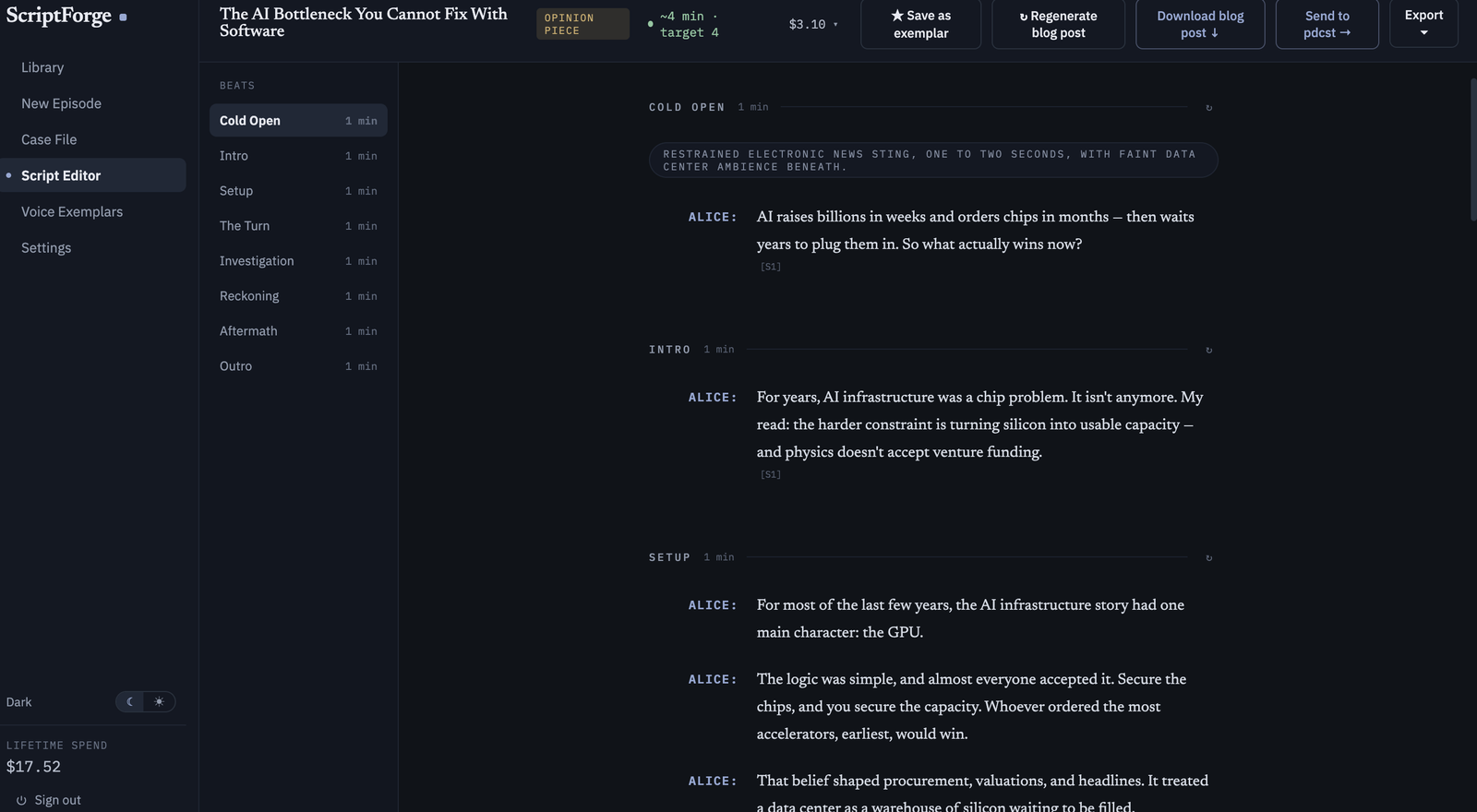
Evidence artifacts from the actual production. Screenshot slots are marked until final captures are supplied.

[ SCREENSHOT SLOT ]
case-file.png

CASE FILE

Research & sources: the structured evidence layer behind the episode.

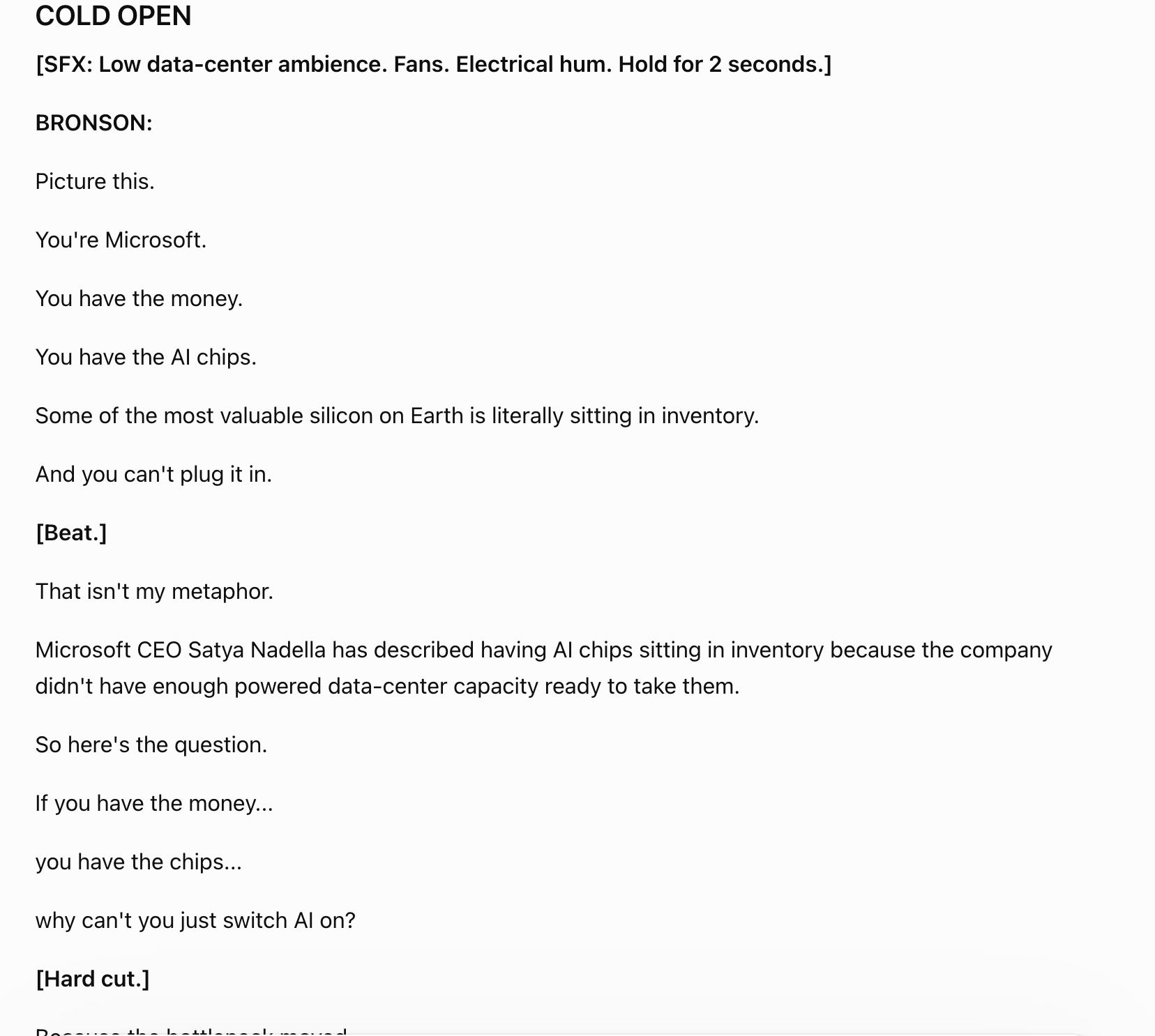
[ SCREENSHOT SLOT ]
screenplay.png

SCREENPLAY

Narrative & production cues: the research transformed into a record-ready story.

[ SCREENSHOT SLOT ]
pdcst-timeline.png

PDCST TIMELINE

Production: the finished screenplay laid out for recording and sound.

[ DIAGRAM SLOT ]
system-workflow.png

SYSTEM WORKFLOW

Orchestration: how the creator stack passes work between tools.

AI-generated synthetic avatar of Bronson Zolik

SYNTHETIC STUDIO

GPU production: private, GPU-backed visual production using my own likeness.

THE CONTENT FLYWHEEL

Every finished story should make the next story easier to find.

RESEARCH FLAGSHIP STORY DERIVATIVE CONTENT AUDIENCE SIGNAL NEXT QUESTION

THIS ISN’T MY FIRST SYSTEM

The podcast stack is part of a much larger body of work.

Outside creative production: document provenance, bank-statement analysis, underwriting intelligence, CRM, communications, data enrichment, electronic signatures, sales outreach, competitive intelligence, and workflow automation.

Across the portfolio, the domain changes. The operating pattern does not.

Understand the problem.
Design the system.
Build the workflow.
Own what happens next.

EXPLORE THE FULL PORTFOLIO →

WHY I BUILT THIS

A cover letter felt like the wrong medium.

I could send a page explaining that I understand AI, creative production, technical systems, content, and startup environments. But those would still be claims. So I built something.

The episode demonstrates the storytelling. The workflow demonstrates the systems thinking. The broader creator stack demonstrates that I do not just use tools. I build around the problems I encounter. The creative side did not start with AI. AI simply gave me a new set of tools to build around.

I am not especially interested in being confined to one format. Podcasting is one format. Video is one format. Writing is one format. Social is one format. The interesting problem is building the system that allows a strong idea to move intelligently across all of them.

You’re building the content function.
I’d like to help build the system behind it.

RESEARCH. STORY. PRODUCTION. DISTRIBUTION. AUTOMATION. ITERATION.
ONE CONNECTED CREATIVE OPERATION.

LET’S TALK → PLAY THE EPISODE →